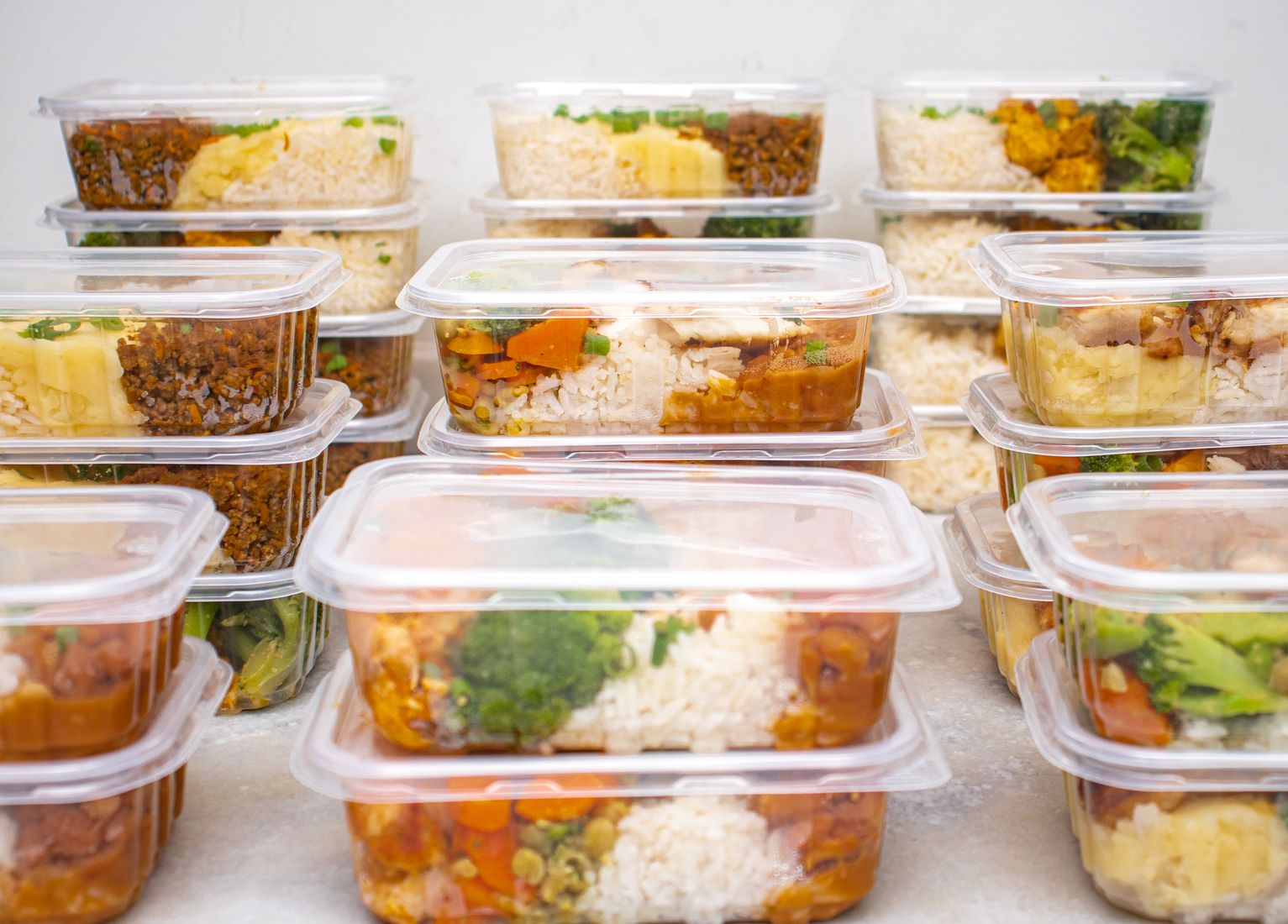
A useful freezer is neither a graveyard of mystery leftovers nor a thirty-meal project. It is one visible shelf of components with a name, date, and job: a base, a satisfying anchor, cooked vegetables, and a flavour boost. Combine two or three when the week goes sideways.
1. Start with a space, not a recipe
Choose one shelf or drawer as the dinner bank. Remove anything whose date or storage history you cannot establish, then keep a short inventory on the freezer door. The US EPA specifically recommends freezing food you know will not be eaten in time and labeling it with contents and dates.
Set the bank’s capacity before cooking. Eight flat portions may be more useful than four deep tubs. Leave enough room to see and circulate what you own, and do not buy new containers until you know which dimensions actually fit. The point is a working queue, not another frozen layer.
- Clear name
- Cooked or frozen date
- Number of portions
- One suggested use
2. Cook four jobs, not eight recipes
Choose one item for each job: a base such as rice or bulgur; a satisfying anchor such as cooked lentils or chicken that suits your household; cooked vegetables; and a flavour boost such as spiced tomato sauce or a herb-lemon mixture. These are assembly examples, not prescribed portions or a nutrition plan.
Keep the main components moderately seasoned and make the final decision later. Lentils can join soup or a grain bowl; roasted vegetables can become a wrap or side. Do not freeze an ingredient merely because it exists. Texture changes vary, so test one small portion when unsure.
- Base × 2 portions
- Anchor × 2 portions
- Vegetables × 2 portions
- Sauce or flavour in small blocks
3. Cool quickly, then freeze clearly
Saudi FDA guidance describes roughly 5–60°C as the range where bacterial growth increases and advises a refrigerator at 5°C or below. USDA says leftovers should go into shallow containers and be refrigerated within two hours. Divide a large pot before chilling; do not leave it on the counter waiting to become room temperature.
Once safely chilled, transfer food into freezer-sized portions, remove excess air where practical, and label before condensation makes the surface slippery. Freezing does not destroy all harmful germs; it keeps food safe while frozen, so handling before the freezer still matters.
Follow product labels and local guidance for each food. Freezing cannot make a perishable item safe again after an unknown period without temperature control.
4. Turn the bank into eight dinner formats
Do not decide the whole week’s meals on batch day. Choose a format when you withdraw: base plus vegetables and sauce for a bowl; anchor plus stock and vegetables for soup; sauce with freshly cooked pasta; or vegetables with eggs cooked at serving time. Add bread, herbs, and crunch fresh when texture matters.
Put a small combination card on the door. On a low-energy night you are not inventing dinner; you are choosing one line. Keep one fully assembled emergency dinner as well for the night when even assembly is too much.
- Base + anchor + flavour = bowl
- Anchor + vegetables + stock = soup
- Vegetables + bread + sauce = wrap
- Sauce + fresh pasta = fast dinner
5. Plan the thaw when you write the label
FoodSafety.gov says not to thaw food on the counter. Safe methods include the refrigerator, cold water in leak-proof packaging, or the microwave; food thawed by cold water or microwave should be cooked or reheated immediately. Some soups and cooked dishes can be reheated from frozen following appliance guidance, though it takes longer.
Write “refrigerator overnight” or “frozen to saucepan” on the label according to the food. USDA advises reheating leftovers to 165°F/74°C. Stir dense foods and check the centre with a food thermometer where needed.
Do not refreeze automatically. Safety depends on how food was thawed, how long it was held, and at what temperature; follow current food-specific official guidance.
6. Withdraw old stock before adding new
Make the night before shopping a bank-withdrawal night: choose the two oldest components and plan the next meal around them. New items go behind; older items stay visible. The goal is not a permanently full freezer but a visible flow.
Every two weeks, ask what vanished quickly and what lingered. Repeat the useful component in a slightly larger batch, and reduce or portion the ignored one more narrowly. Within a month, the bank begins to reflect your actual evenings rather than an ideal person who cooks nightly.
Affiliate links · Amazon.sa
Two optional tools for visibility and organization; use safe freezer-suitable items you already own.
As an Amazon Associate I earn from qualifying purchases. No retailer prices or images are shown, and commission does not determine editorial coverage. Disclosure.
Sources and limits
Official sources checked 30 July 2026. This is general organization and food-safety guidance, not medical advice, individualized nutrition advice, or a restrictive diet.